premier-league
Raheem Sterling: Career, Clubs & Playing Style
A winger built on acceleration and short-space dribbling, and a career shaped by three of England's biggest clubs.
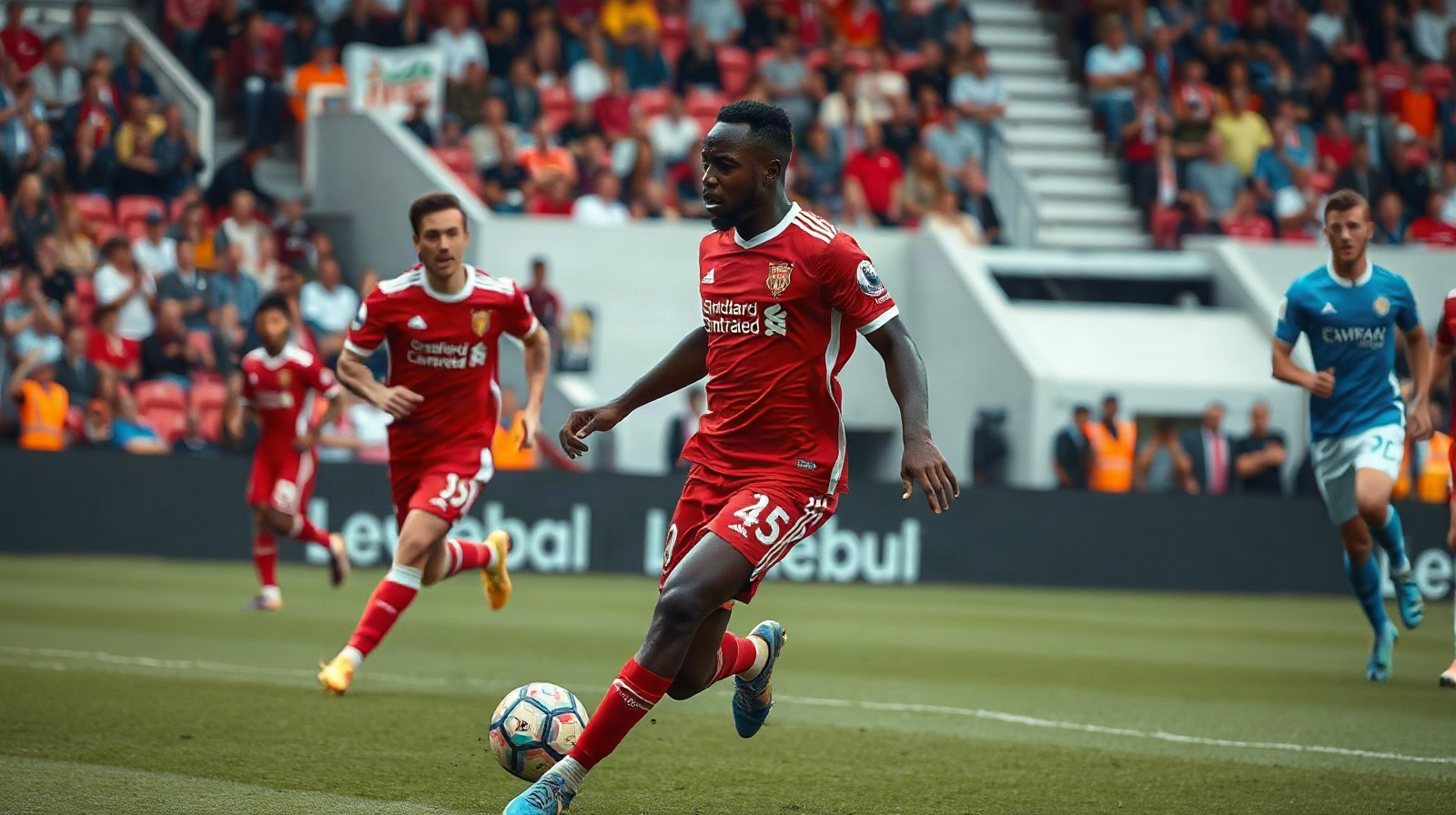
Raheem Sterling is one of the defining English attackers of the 2010s and early 2020s. Born in Kingston, Jamaica, and raised in north-west London within sight of Wembley, he built a career on two things that never really changed regardless of the shirt: acceleration over the first ten yards, and the willingness to run at a defender rather than pass sideways.
This profile covers the clubs, the England career, the trophies and the tactical detail of how he plays. For the fixtures those clubs are involved in now, the guides across this site cover the broadcasters carrying each competition.
Youth career and the Liverpool breakthrough
Sterling started in the Queens Park Rangers academy in west London. Liverpool signed him as a teenager, and by the 2012/13 season he was in the first team, one of the youngest players to appear in the Premier League for the club at that point.
His most significant Liverpool campaign was 2013/14, when Brendan Rodgers built an attack around Luis Suárez and Daniel Sturridge with Sterling working the channels behind and around them. Liverpool scored at a rate almost nobody in the modern Premier League has matched and finished second, and Sterling, still a teenager for most of it, was a regular starter rather than an impact substitute. That season is the reason his transfer fee two years later was as high as it was.
Manchester City and the Guardiola years
Manchester City signed Sterling in the summer of 2015 for a fee that was a record for an English player at the time. His first season under Manuel Pellegrini was fine without being transformative. What changed was Pep Guardiola’s arrival in 2016.
Guardiola’s demands reshaped him. The instruction was positional discipline first: hold the touchline until the ball arrives, then attack the space. Sterling’s finishing, which had been the weakest part of his game at Liverpool, improved sharply, and he moved from a winger who created chances to a winger who scored 15 to 20 goals a season across competitions. He was central to the record-breaking 2017/18 title side and stayed a first-choice attacker through the run of Premier League titles and domestic cups that followed.
City is where the medals are. It is also where the tactical version of Sterling most people picture was built: high and wide in the first phase, then narrow and inside the full-back once City moved the ball to the opposite side.
Chelsea and the move back to London
Sterling joined Chelsea in the summer of 2022, returning to the city he grew up in, and became one of the senior attackers in a squad going through heavy turnover. Chelsea’s rebuild during that period ran through several managers and a very young squad, and Sterling’s role shifted with each of them, sometimes as the wide starter, sometimes as the experienced option from the bench.
England and the major tournaments
Sterling’s international career is substantial by any measure. He passed 80 senior England caps and started at major tournaments across three different England cycles.
The clearest run was Euro 2020, played in 2021, where he scored in the group stage and was one of the tournament’s most consistent England performers as Gareth Southgate’s side reached the final at Wembley before losing to Italy on penalties. He also featured at the 2018 World Cup, where England reached the semi-final in Russia, and at the 2022 World Cup in Qatar.
He belongs to the England generation that changed the national team’s tournament reputation, alongside long-tenured names like Harry Kane and Jordan Henderson, moving England from early exits to consistent deep runs.
Playing style: what he actually does
Three traits define him.
Acceleration in short space. Sterling is not primarily a long-distance sprinter. His advantage shows up in the first few strides, which is what lets him take a defender on from a standing start in a crowded penalty area rather than needing 40 yards of open grass.
The inverted winger role. Stationed wide, his instinct is to come inside rather than reach the byline. That produces a different threat to a traditional crossing winger: he arrives in the space between the centre-back and the full-back, which is where his goals tend to come from.
Volume of touches in the box. Under Guardiola in particular, his job was to be in the six-yard area when the ball came from the opposite flank. A large share of his Premier League goals are close-range finishes from that pattern, and that is a positional skill as much as a finishing one.
The criticism that followed him throughout was finishing consistency: he took a high volume of chances and did not convert all of them. The counter-argument is that arriving in those positions at that frequency is itself the hard part.
How to follow his clubs’ fixtures
The clubs Sterling has played for (Liverpool, Manchester City, Chelsea) are all Premier League sides, so their matches sit inside the UK domestic rights split between Sky Sports and TNT Sports, with international coverage varying by country. Our broadcaster guides cover which service carries which competition in each market. Rather than list fixtures that shift, the board below pulls upcoming matches in England directly, so you can check dates and kick-off times as they are confirmed.
Frequently asked questions
Which clubs has Raheem Sterling played for? Queens Park Rangers at youth level, then Liverpool, Manchester City (from 2015) and Chelsea (from 2022).
What position does Raheem Sterling play? Winger, usually on the left, most often as an inverted winger cutting inside rather than a touchline crosser.
What has he won? His major honours came at Manchester City: multiple Premier League titles plus domestic cups during the club’s most dominant period.
Did Raheem Sterling play in a major tournament final? Yes. He started for England at Euro 2020, where England reached the final at Wembley and lost to Italy on penalties.